|
|
|
ชีวิตที่ผ่านมา (จำอดีตมาเล่าขาน)
|
Doi Ang Khang Royal Agricultural Station (1976)
 ทำงานที่สถานีเกษตรหลวงดอยอ่างขาง (2519)
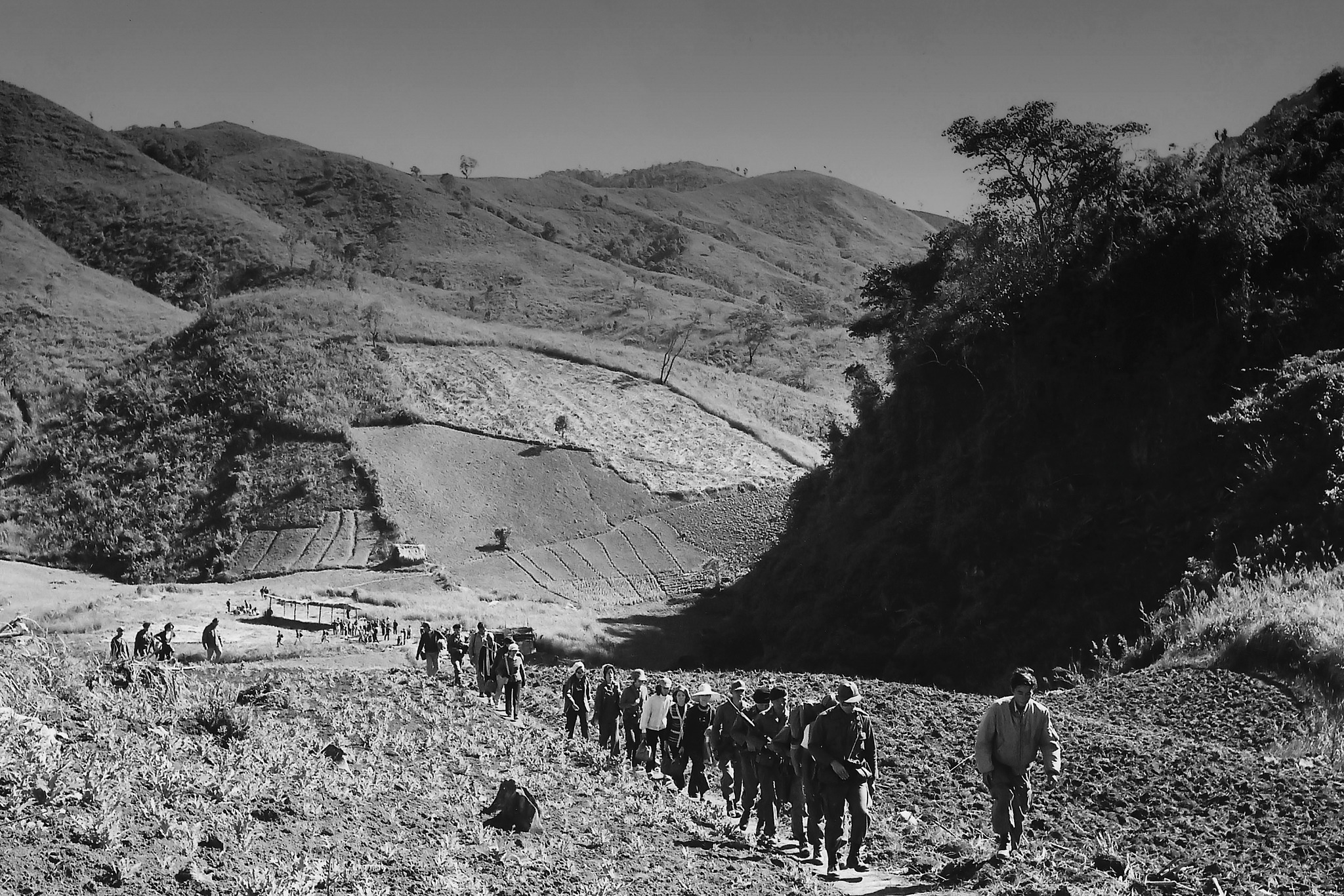
ในหลวงรัชกาลที่ 9 เสด็จทรงงานที่ดอยอ่างข่าง Chedit Photo: Napan Sevikul
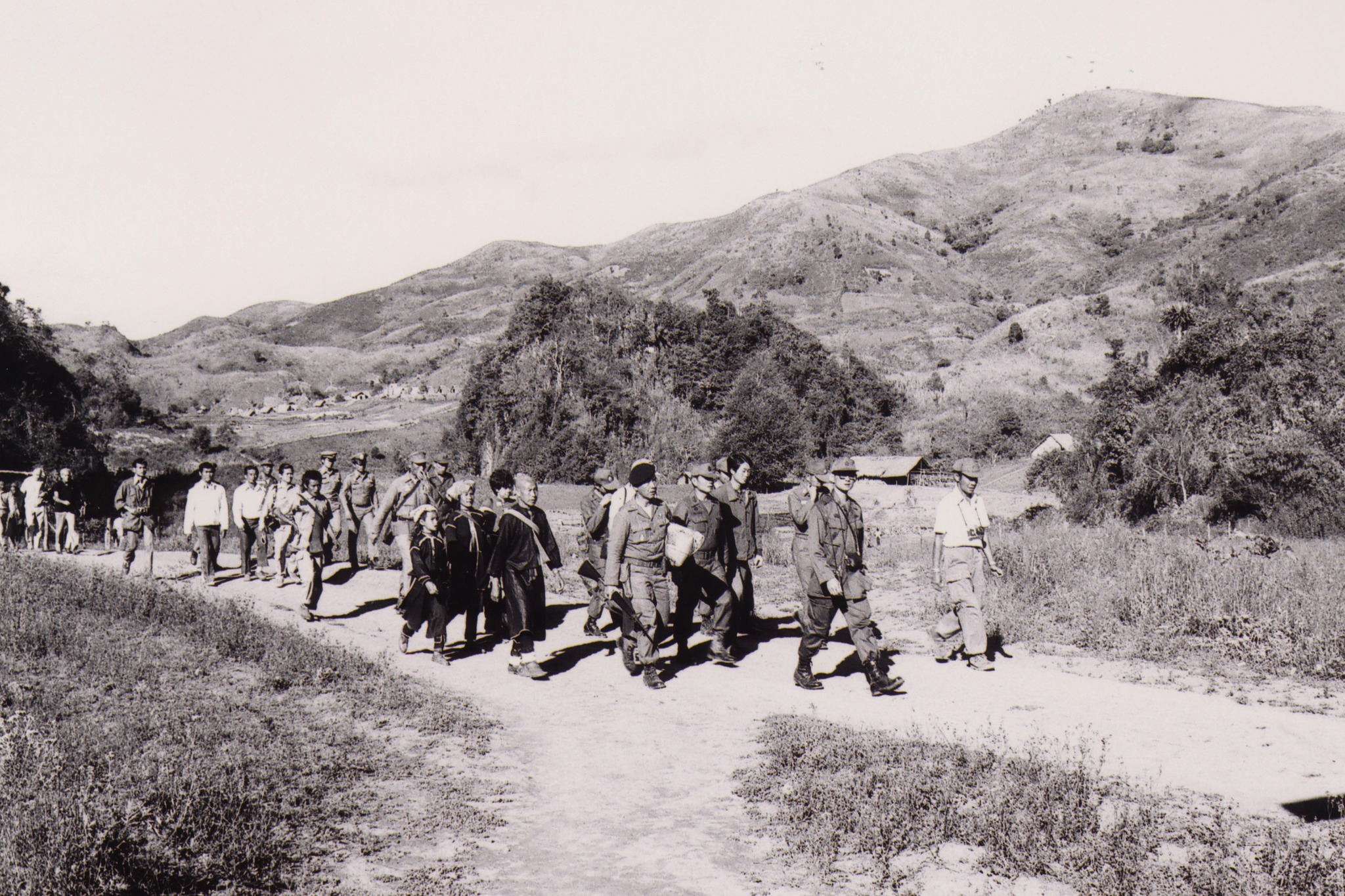
ในหลวงรัชกาลที่ 9 เสด็จทรงงานที่ดอยอ่างข่าง Chedit Photo: Napan Sevikul
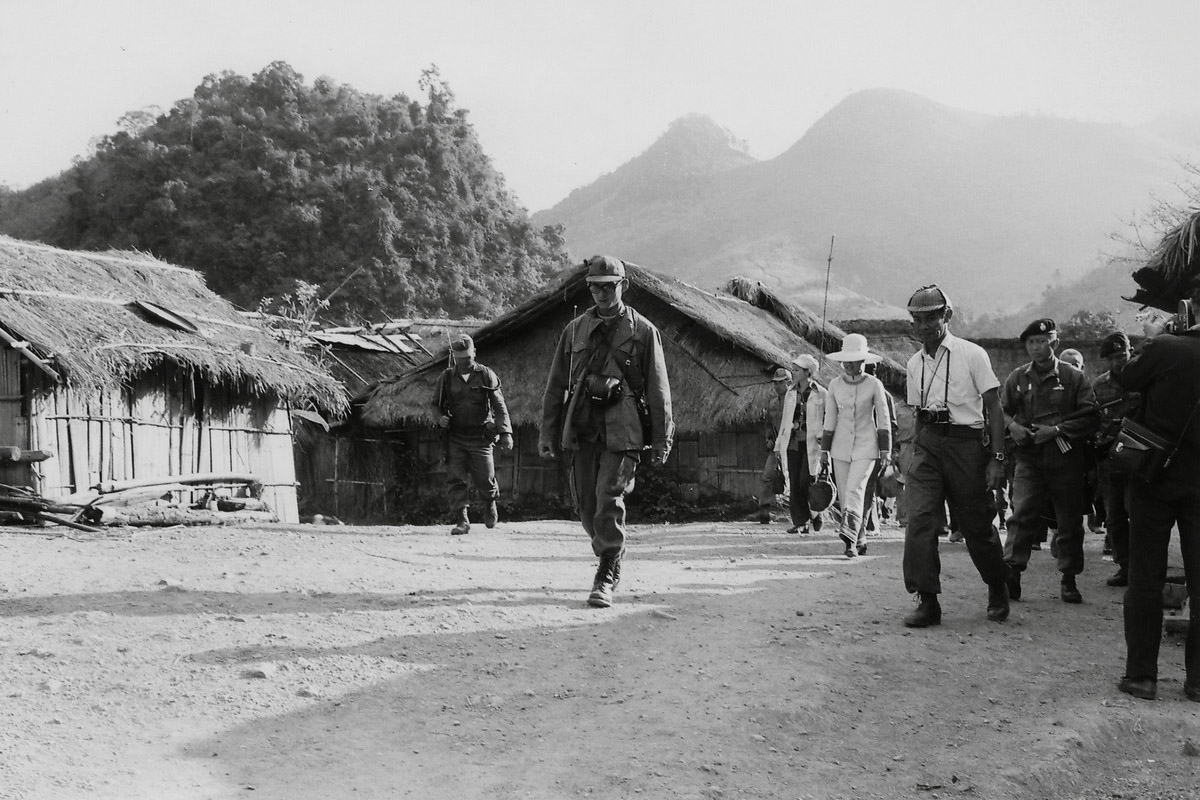
เสด๊จผ่าบบ้านคุ้ม หม่อมเจ้าภีศเดช รัชนี (เสื้อสีขาวขวามือ) เสด็จทรงงานที่ดอยอ่างข่างอยู่เป็นประจำ Chedit Photo: Napan Sevikul
ตามภาพ ในหลวงรัชกาลที่ 9 เสด๊จผ่าบบ้านคุ้ม มองเห็นเนินเขาลูกเล็กที่อยู่ด้านซ้ายมือคือที่ตั้งสวนพันห้า (ซื้อมาในราคาพันห้าร้อยบาท) ใช้ทดลองปลูกต้นท้อ ต้นแอปเปิ้ล ลักษณะเป็นหุบเขาหรืออ่างกะทะขนาดเล็ก มีครอบตร้วคนงานคนไทยคอยดูแล บางครั้งก็จ้างชาวมูเซอร์และจีนฮ้อมาดายหญ้า พรวนดินใส่ปุ๋ย
กระท่อมหลังซ้ายมือ คือ ร้านก๋วยเตียวน้องเหม๋ย (สาวจีนฮ้อ) ตรงกลางเป็นร้านขายของชำของจีนฮ้อ
สุดหมู่บ้านเป็นร้านคนเมือง ขายก๋วยเตียว บางทีก็มีขนมจีน (ไม่มีอาหารตามสั่ง)
ถ้าหิวต้องรีบกลับไปทานโรงครัวให้ทันตามเวลา ไม่งั้นอดอาหาร ตอนหลังต้องหันมาทำทานกันเอง
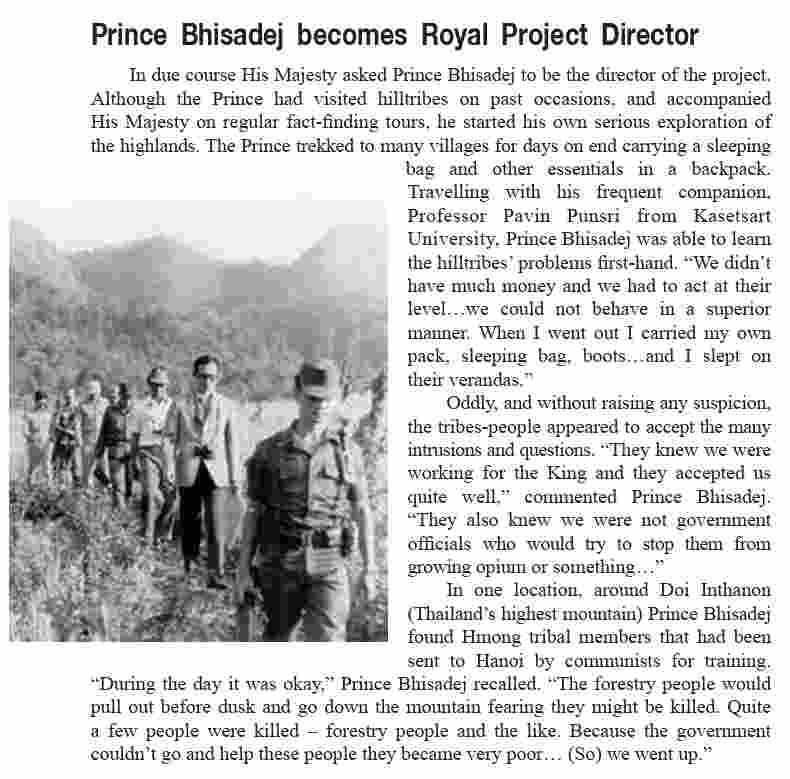
From: Royal Activities and International Cooperation, 2014, page 117
Prince Bhisadej becomes Royal Project Director
In due course His Majesty asked Prince Bhisadej to be the director of the project.
Although the Prince had visited hilltribes on past occasions, and accompanied
His Majesty on regular fact-finding tours, he started his own serious exploration of
the highlands. The Prince trekked to many villages for days on end carrying a sleeping
bag and other essentials in a backpack.
Travelling with his frequent companion,
Professor Pavin Punsri from Kasetsart
University, Prince Bhisadej was able to learn
the hilltribes’ problems first-hand. “We didn’t
have much money and we had to act at their
level…we could not behave in a superior
manner. When I went out I carried my own
pack, sleeping bag, boots…and I slept on
their verandas.”
Oddly, and without raising any suspicion,
the tribes-people appeared to accept the many
intrusions and questions. “They knew we were
working for the King and they accepted us
quite well,” commented Prince Bhisadej.
“They also knew we were not government
officials who would try to stop them from
growing opium or something…”
In one location, around Doi Inthanon
(Thailand’s highest mountain) Prince Bhisadej
found Hmong tribal members that had been
sent to Hanoi by communists for training.
“During the day it was okay,” Prince Bhisadej recalled. “The forestry people would
pull out before dusk and go down the mountain fearing they might be killed. Quite a few people were killed – forestry people and the like. Because the government
couldn’t go and help these people they became very poor… (So) we went up.” (From: Royal Activities and International Cooperation, 2014, page 117)
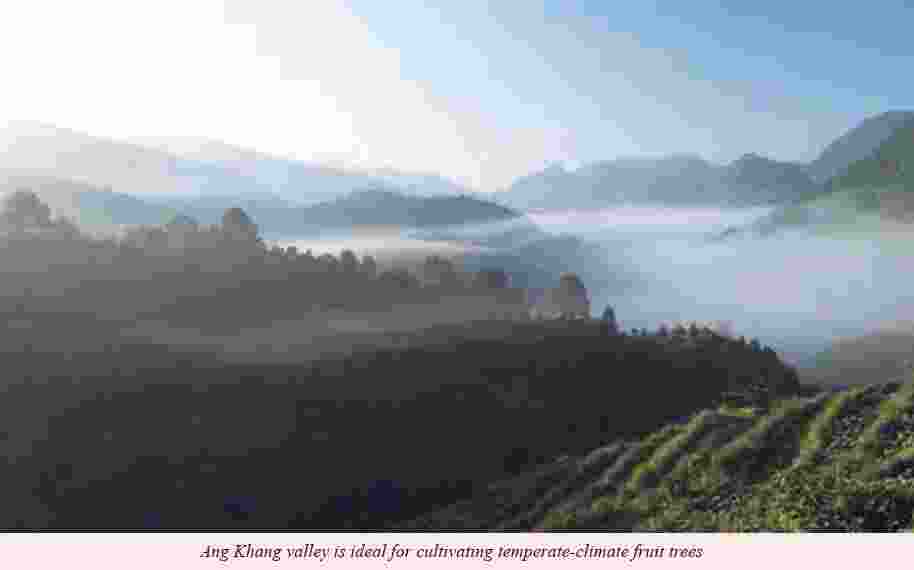
Ang Khang valley is ideal for cultivating temperate-climate fruit trees.
(Ibid., page 119)
Work commences at Ang Khang
Located in the northwest of Chiang Mai province, close to the border with Myanmar, Ang Khang valley is five kilometres long and rises 1,400 metres. Enclosed by even higher, limestone peaks, this remote area mirrors scenes from the novel “Lost Horizon”; best remembered as the origin of the mythical Shangri-La.
The pristine slopes were once covered with poppies amidst a profusion of wild apples, local peaches and other fruits. But it was the temperate climate that first attracted the Royal Project team to the area; they considered it eminently suited for cultivating temperate- climate fruit trees. Enthusiastically, Royal Project members acquired European text books to learn how to grow temperate-climte trees only to come up against a new problem: “Our temperate fruit textbooks couldn’t be used in Thailand because the micro-climate isn’t the same,” explained Dr Santhad Rojanasoonthon, the then chairman of the research section of the Royal Project Foundation. (Ibid., page 119)
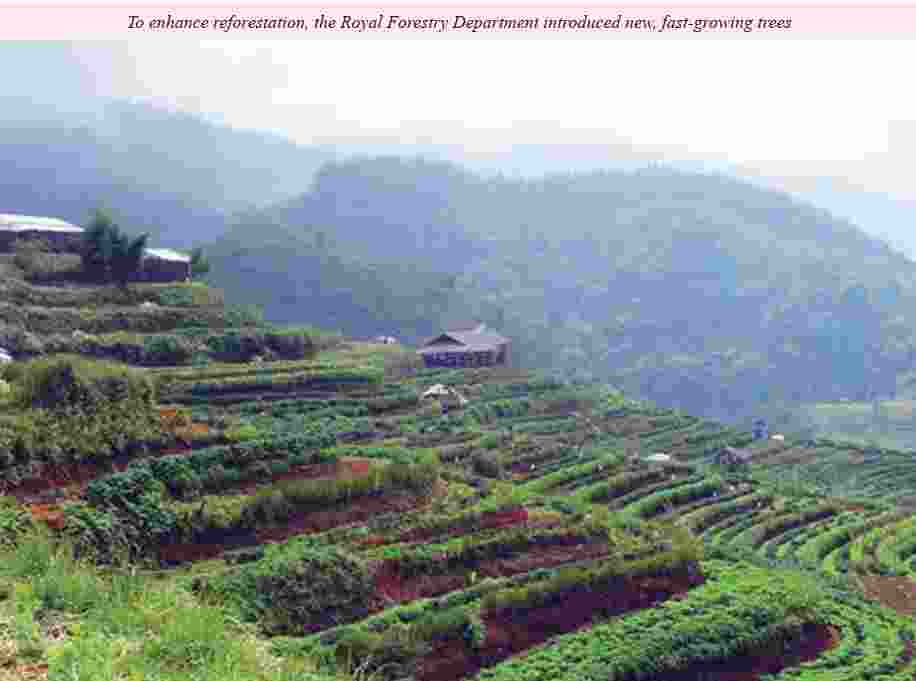
To enhance reforestation, the Royal Forestry Department introduced new,
fast-growing trees.
(Ibid., page 123)
Deforestation and reforestation
Years of indiscriminate swidden farming resulted in large-scale deforestation in the mountains. Concerned about this, His Majesty offered to provide compensation to hilltribes for crops grown on tracts of land used in research work under the Royal Project. This was seen as an unconventional approach bearing in mind that the hill- tribes were living illegally in a watershed area. “His Majesty said that they were here f irst,” recalled Dr Santhad. Officials were advised by the King to let the tribes stay rather than go elsewhere where they would possibly destroy other tracts of land.
To reforest the hills and rehabilitate the Ang Khang watershed, the Royal Forestry Department introduced new, fast-growing acacias, pines, and cedars. The King also suggested introducing three types of wood for four types of use, one of His Majesty’s sustainable development theories. (Ibid., page 123)
His Majesty explained: “Growing three types of forests yields four benefits: Apart from the obvious gains of fruits, timber and firewood, there is the important, fourth benefit of soil and watershed conservation.”
The practical benefits of this campaign ensured a sufficient supply of wood for material needs so it was not necessary to fell more trees for domestic use. Reforested areas were preserved more efficiently than simply banning people from cutting down any trees at all.
The Royal Project’s forestry programme was conducted in partnership with Taiwan. A demonstration plot with a seedling nursery built at Doi Ang Khang yielded 1.2 million seedlings between 1982 and 1994. The saplings helped preserve the forests. Fruit trees played a major role in reforestation because they are almost never removed, or burnt accidentally, because they are planted as an orchard.
(Ibid., page 124)
National and international cooperation
Domestic and overseas co-operation proved invaluable in furthering the objectives of the Royal Project.
The Royal Pang Da, Inthanon, Ang Khang, and Mae Lod research stations together with thirty-eight Royal Project Development Centres, all house researchers and volunteers from several Thai universities and government agencies. They work as volunteers in the name of His Majesty. Most of the research is actually done by universities, technically working under the Royal Project only because work in watershed and protected areas is strictly controlled.
A successful outcome could never have been achieved without the participation of national institutes and agencies unified by a sense of purpose inspired by His Majesty the King. Some of the contributing organisations involved include Chiang Mai University, Kasetsart University, Maejo University, Ministry of Agriculture and Cooperatives, Department of Industrial Promotion, Ministry of Industry, the Border Patrol Police as well as direct assistance from the Royal Thai government. Strategically, considerable research assistance came also from the Thailand Institute of Scientific and Technological Research of the Ministry of Science and Technology.
On the international scene, His Majesty had already developed strong ties with overseas countries as a result of his many visits abroad in the Sixties. When His Majesty mentioned to members of the diplomatic corps the new Royal Project to develop the North, the king received enthusiastic and immediate support from embassies in the form of donations of temperate and semi-temperate fruit trees. Counted among the donor countries were Australia, France, Indonesia, Iran, Israel, Italy, Lebanon, New Zealand, the UK, and Germany.
Dr Shen Chang-huan, ambassador to Thailand for what was then Chinese- Taipei, when made aware of the new Royal Project, notified his government of Thailand’s need for fruit saplings, vegetable seeds, and expert assistance to develop mountain agriculture. His request met with a positive response. For many years the Vocational Assistance Commission for Retired Servicemen (VACRS) – Kuomintang army veterans – had developed temperate-zone fruit plantations in Taiwan’s own central highlands. VACRS chose Mr Soong Ching-yun, deputy director of one of the farms, to visit Thailand to conduct a first hand assessment of the situation.
Early in 1971, “Papa Soong”, as he is still fondly referred to by local folk, began planting saplings flown in from Taiwan. The results were positive. Later, Taiwan was instrumental in setting up the Royal Agricultural Station at Ang Khang and a Taiwanese team agreed to stay in Ang Khang indefinitely to establish a cooperative relationship with the Royal Project. (Ibid., page 127-128)
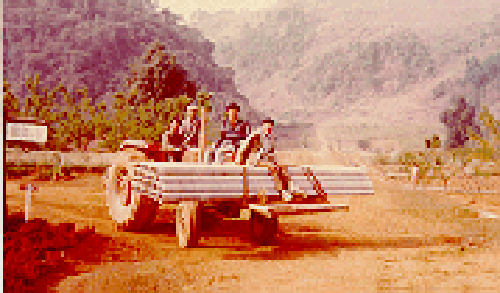
รถแทรกเตอร์ดันดิน (Track Type Tractors) หรือ รถดันตีนตะขาบ คันนี้มีประโยชน์มาก ใช้สำหรับเกลี่ยดิน ปรับหน้าดินทั้งงานก่อสร้างและงานเกษตรกรรม ตัวรถมีใบมีดด้านหน้าสามารถดันดินและหินไปด้านหน้า
ตัวรถขับเคลื่อนด้วยล้อตีนตะขาบ ช่วยให้สามารถเข้าถึงพื้นที่ที่ยากลำบาก เช่น ป่า, เขา, เนินดินได้ง่ายขึ้น อีกทั้งสามารถปรับหน้าดินให้อยู่ในระดับเดียวกัน เหมาะกับใช้ในงานปรับพื้นหน้าผิวถนนซึ่งเป็นดินลูกรัง, การปรับหน้าดินทางลาดเนินเขาเป็นแปลงเกษตรกรรม, การยกสิ่งของหนัก, ยกรถติดหล่มโคลน, การขุดทางระบายน้ำ และอื่นๆ
ในปี 2519 ขณะเป็นเจ้าหน้าที่อุตุนิยมวิทยา ประจำสถานีเกษตรหลวงดอยอ่างขาง อ.ฝาง จ.เชียงใหม่ ก็ได้อาศัยนั่งรถคันนี้ออกตรวจตามทางที่จะไป
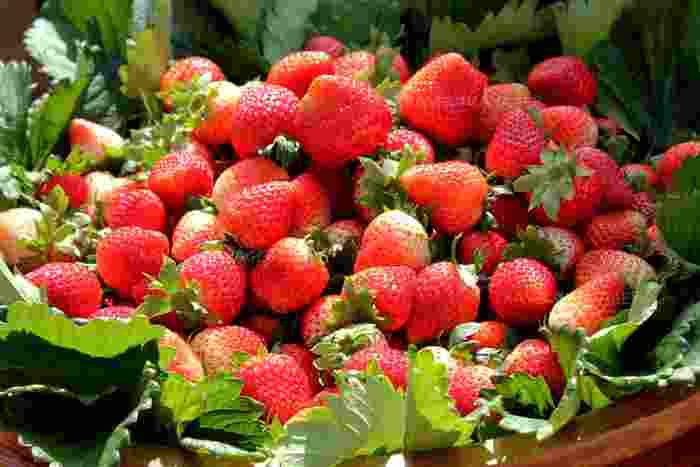
สตรอว์เบอร์รี่ พันธุ์พระราชทาน 80 Chedit: mgronline.com, 2560
สตรอว์เบอร์รี่ พันธุ์พระราชทาน 80 เป็นสายพันธุ์กินผลสด และเป็นพันธุ์ที่ต้องการอากาศหนาวเย็นมากกว่าพันธุ์อื่นๆ คือ ต้องปลูกในพื้นที่สูงตั้งแต่ 800 เมตรขึ้นไป อุณหภูมิเฉลี่ยประมาณ 16-20 องศาเซลเซียสไม่น้อยกว่า 30 วัน ซึ่ง “สถานีเกษตรหลวงอ่างขาง” จะเป็นพื้นที่ปลูกได้ผลดี เพราะมีความสูงประมาณ 1,400 เมตร เพื่อกระตุ้นการสร้างตาดอกอย่างต่อเนื่อง และให้ได้ผลผลิตในปริมาณมากและยาวนานขึ้น และยังเป็นพันธุ์ที่ต้านทานต่อโรคแอนแทรคโนสและราแป้งได้ดี
นอกจากนี้ยังมีลักษณะเด่นกว่าพันธุ์อื่น ๆ ตรงที่ผลสุกมีกลิ่นหอม และมีรสชาติหวานกว่า เนื้อผลแน่น สีแดงสด และรูปร่างของผลสวยงาม
ในปี 2519 ที่ผมทำงานอยู่ในสถานีเกษตรหลวงอ่างขางก็เริ่มทดลองปลูกสายพันธุ์ต่างๆ ที่นำเข้าจากต่างประเทศก่อนหน้านี้แล้ว โดยจะปลูกในแปลงทดลองระหว่างสำนักงานสถานีกับบ้านพักเจ้าหน้าที่ ประมาณเกือบ 3 ไร่
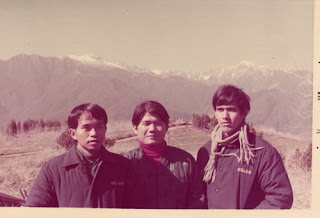
อ.วุฒิ มณีปุระ (ซ้ายสุด), วรพงษ์ เครือเขื่อนเพชร (อ้วน) และ ถาวรรัตน์ ยอดศรี (แขก)
รัฐบาลไต้หวันยังให้ทุนเจ้าหน้าที่ไปศึกษาดูงานที่ฟูจูซานฟาร์ม 1 ปี ประเทศไต้หวัน
จากคลังบทความของบล็อก จา มณี "หลากหลายเรื่องราวของ จา มณี"
ในความทรงจำข้าพเจ้า ดอยอ่างขางคือสถานีวิจัยที่อยู่ไกลมาก กันดารมาก และอันตรายมาก ข้าพเจ้าจำได้ว่าขึ้นไปอ่างขางครั้งแรกเมื่อปี 2519
สภาพพื้นที่ในขณะนั้นมีแต่แปลงไม้ผล ซึ่งเป็นงานวิจัยของมหาวิทยาลัยเกษตรศาสตร์ แต่ก็มีความงามตามธรรมชาติของพื้นที่ซึ่งยังไม่มีการปรุงแต่ง ดอยอ่างขางอยู่สูงจากระดับน้ำทะเลถึง 1,400 เมตร สมัยนั้นการขึ้นลงลำบากมากสุด ๆ เพราะยังไม่มีถนนหนทาง การสัญจรใช้การเดินเท้าลัดเลาะตามไหล่เขาเพียงอย่างเดียว เส้นทางการเดินป่าขณะนั้นมีอยู่ 2 เส้นทางด้วยกัน เส้นทางแรก จะเริ่มจากบ้านแม่เพอะ ผ่านม่อนโจะโละ ผ่านบ้านขอบด้ง ผ่านกิ่วลม และเข้าสู่สถานีอ่างขาง ส่วนอีกเส้นหนึ่ง จะเริ่มจากบ้านม่วงชุม ผ่านบ้านนอแล ผ่านกิ่วลม และเข้าสู่สถานีอ่างขาง เส้นทางหลังนี้ดูจะเดินยากหน่อยเพราะสูงชันมาก ชาวเขาเองก็ไม่ค่อยใช้กัน แต่ไม่ว่าเส้นทางไหนก็สาหัสทั้งสิ้น การขึ้นลงจึงไม่อาจทำได้ตามใจชอบ เพราะขึ้นลงแต่ละครั้งต้องใช้เวลาเป็นวัน ทั้งยังมีความเสี่ยงภัยระหว่างการเดินทาง อาหารการกินจึงต้องอาศัยการส่งเสบียงทางอากาศ ซึ่งจะมีเฮลิคอปเตอร์ของตำรวจตระเวณชายแดนแวะมาส่งเสบียงให้เดือนละครั้ง
ในการเดินทางขึ้นดอยอ่างขางครั้งแรกของข้าพเจ้า นับว่าโชคดีมากเพราะตรงกับช่วงเวลาที่มีการส่งเสบียงขึ้นดอย จึงได้ขออาศัยนั่งเฮลิคอปเตอร์ของตำรวจตระเวณชายแดนที่ขึ้นไปส่งเสบียง ดู ดู เหมือนกับโก้ แต่เปล่าเลยขาลงไม่มีเฮลิคอปเตอร์ มาส่งเสบียงอีก จึงต้องเดินลัดเลาะไหล่เขาลงมาเหมือนคนอื่น ๆ มันเป็นการเดินทางที่สาหัสที่สุดในชีวิต แต่ก็ทำให้ได้เห็นถึงความลำบากของเจ้าหน้าที่ ที่ปฏิบัติงานบนดอย เพราะหากมีเรื่องการเจ็บไข้ได้ป่วยฉุกเฉิน คงจะเป็นเรื่องที่ลำบากมากทีเดียว
สถานีแห่งนี้มีที่มาจากการที่ในหลวงและพระราชินี ได้เสด็จพระราชดำเนินเยี่ยมราษฎรที่ อ.ฝาง จ.เชียงใหม่ และเสด็จผ่านดอยอ่างขางได้ทอดพระเนตรเห็นว่าบริเวณนี้เป็นเขาหัวโล้น ชาวเขาส่วนใหญ่ที่อาศัยอยู่บริเวณนี้ปลูกฝิ่นกัน เป็นการทำลายทรัพยากรป่าไม้ต้นน้ำลำธารที่เป็นแหล่งสำคัญต่อระบบนิเวศน์ ซึ่งจะก่อให้เกิดความเสียหายต่อส่วนอื่นของประเทศ จึงขอซื้อที่ดินจากชาวเขาในบริเวณดอยอ่างขางส่วนหนึ่ง ด้วยพระราชทรัพย์ส่วนพระองค์ จำนวน 1,500.-บาท เพื่อใช้เป็นแหล่งวิจัยและทดลองปลูกพืชเมืองหนาวชนิดต่าง ๆ เพื่อเป็นตัวอย่างแก่ชาวเขา ให้หันมาปลูกทดแทนฝิ่น และพระราชทานนามว่า"สถานีเกษตรหลวงอ่างขาง" สถานีแห่งนี้เป็นแห่งที่ 2 นับจากที่ได้โปรดเกล้าให้ตั้งโครงการหลวงขึ้นมาเมื่อปี 2512 โดยมีท่านหม่อมเจ้าภีศเดช รัชนี ทรงเป็นประธานมูลนิธิโครงการหลวง ดูแลรับผิดชอบ และมีสถานีวิจัยแห่งแรกอยู่ที่ดอยปุย ซึ่งที่นั่นในหลวงได้ซื้อที่ดินจากชาวเขาด้วยพระราชทรัพย์ส่วนพระองค์เองเช่นกัน จำนวน 200,000.- บาท และพระราชทานนามว่า "สวนสองแสน"
พี่วินัย ปั่นศิริ รุ่นพี่เกษตรรุ่น 19 เป็นหัวหน้าสถานีคนแรกของอ่างขาง เมื่อปี 2513 อยากจะเรียกว่าเป็นรุ่นบุกเบิกพลิกฟื้นแผ่นดิน เพราะขณะนั้นสภาพโดยทั่วไปของอ่างขางยังเป็นสภาพที่ยังไม่ได้พัฒนาอะไรเลยมีแต่ป่าเขาลำเนาไพรและความเสี่ยงภัยมีอยู่รอบตัวทั้งจากชนกลุ่มน้อยชาวมูเซอร์ดำ , ชาวจีนฮ่อ และ ไทยใหญ่ ที่สำคัญเหนือสิ่งอื่นใด คือกองคาราวานฝิ่น บุคคลที่ขึ้นไปทำงานบนดอย จึงต้องดำรงชีวิตอย่างระวังภัยอยู่ตลอด 24 ชม. ไม่ต่างกับทหารหรือตำรวจตระเวณชายแดน ไม่ว่าจะเกิดอะไรขึ้นพวกเขาต้องช่วยตัวเองเท่านั้น สิ่งเดียวที่เป็นพลังให้พวกเขาอยู่กันได้ ก็คือความศรัทธาและพระบารมีในหลวง ในอันที่จะทำเพื่อประโยชน์สุขของประชาชน จึงเป็นเสมือนยันตร์กันภัยที่ทำให้พวกเขาแคล้วคลาดจากภยันตรายทั้งหลายทั้งปวงได้
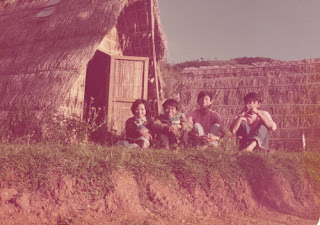
บ้านพักของเจ้าหน้าที่ลักษณะบ้านเป็นแบบ A Frame คือหลังคาชนกันเป็นรูปตัว A
วุฒิ มณีปุระ ได้เข้าไปร่วมงานที่สถานีเกษตรหลวงอ่างขาง หลังจากจบจากมหาวิทยาลัยเกษตรศาสตร์ โดยระหว่างเรียนได้ไปฝึกงานอยู่ที่สถานีวิจัยดอยปุย ทำให้อาจารย์สืบศักดิ์ นวจินดา , ศาสตราจารย์ ปวิณ ปุณศรี ได้มองเห็นแววมุ่งมั่นในการทำงาน จึงส่งตัวขึ้นไปช่วยงานพี่วินัย ตั้งแต่ปี 2517 การเดินทางขึ้นดอยในครั้งนั้น อาศัยรถแลนด์โรเวอร์ของสถานีวิจัยดอยปุย ไปส่งจนถึงบ้านหัวนา
ซึ่งอยู่เชิงดอยอ่างขางหลังจากนั้นก็มีเฮลิคอปเตอร์ของตำรวจตระเวณชายแดนมารับขึ้นไปส่งบนดอยอีกทีหนึ่ง ภูมิประเทศของดอยอ่างขางจะมีลักษณะเป็นรูปอ่าง มีลานกว้างไว้สำหรับจอด ฮ. ในสถานี
รอบๆ สถานีจะมีบ้านพักของเจ้าหน้าที่ทั้งหมด 11 หลังด้วยกัน มีโรงครัว 1 หลัง และสโมสรอีก 1 หลัง ลักษณะบ้านเป็นแบบ A Frame คือหลังคาชนกันเป็นรูปตัว A มุงด้วยหญ้าคา ส่วนฝาบ้านใช้ไม้ไผ่ทุบเป็นซีกเล็ก ๆ มัดต่อเนื่องกัน
เจ้าหน้าที่อยู่กันคนละหลัง เช้าก็ไปเข้าแปลงงาน เย็นก็มาทานข้าวกันที่สโมสร ซึ่งมีถาวร บัวชุ่ม (วอน) เป็นพ่อครัวจัดเตรียมไว้ให้ ชีวิตมีอยู่แค่นั้นเพราะบนนั้นไม่มีไฟฟ้าใช้ มืดลงก็เงียบสงัด แต่ละบ้านจึงต้องมีเทียนไว้จุดให้ความสว่าง ส่วนน้ำใช้ต่อท่อจากลำธารต้นน้ำบนภูเขามาใช้ น้ำที่นั่นจึงเย็นจัดเหมือนกับน้ำในตู้เย็นเลยทีเดียว
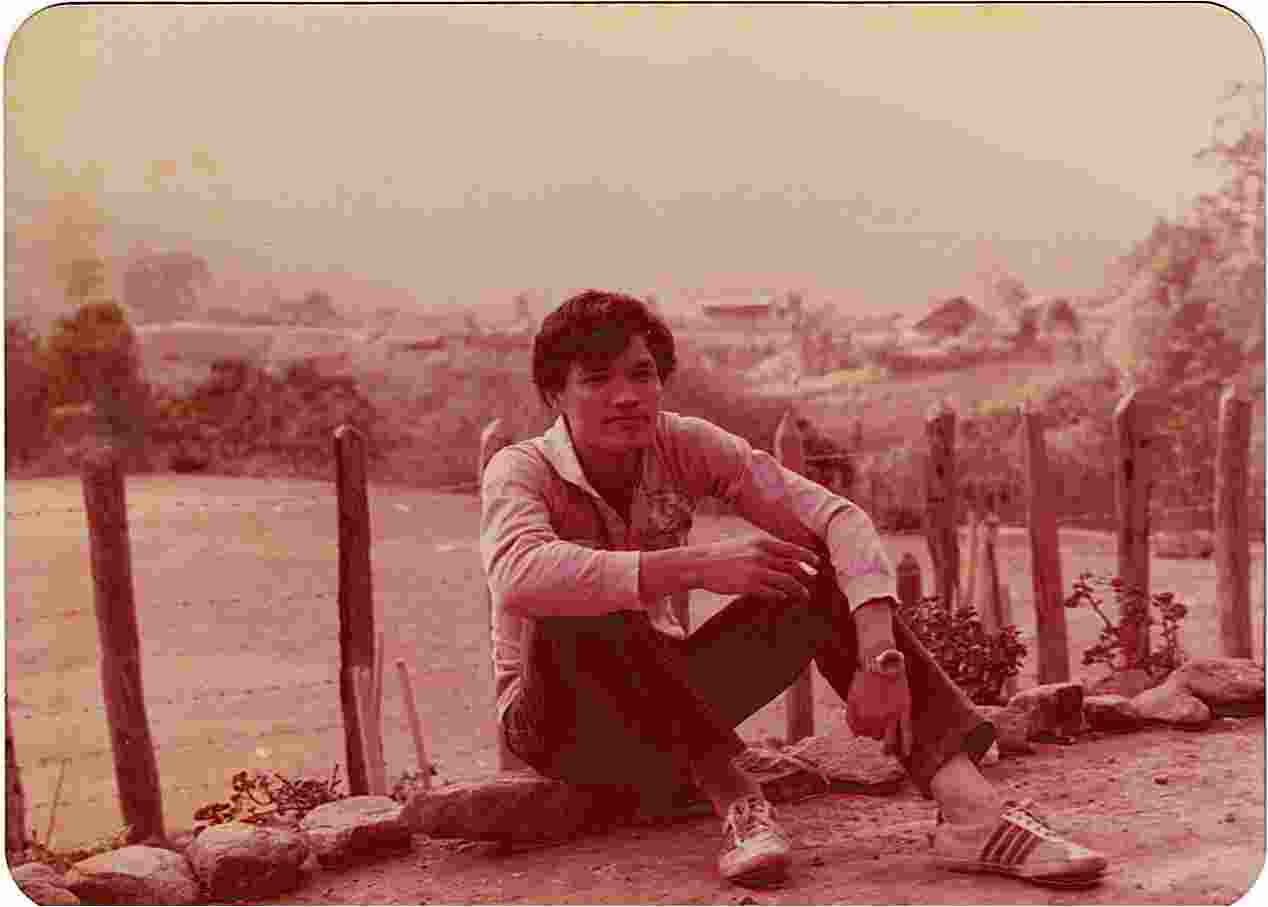
2519 ขณะเป็นเจ้าหน้าที่อุตุนิยมวิทยา สถานีเกษตรหลวงดอยอ่างขาง
ข้อมูลอุตุนิยมวิทยาของดอยอ่างขางในอดีต โดยเฉพาะช่วงประมาณปี พ.ศ. 2519 เป็นช่วงเริ่มต้นของการพัฒนาพื้นที่เกษตรที่สูง ซึ่งมีลักษณะอากาศหนาวเย็นตลอดปี อุณหภูมิต่ำกว่า 0 องศาเซลเซียสได้ในฤดูหนาว และมีความชื้นสูง เหมาะแก่การปลูกพืชเมืองหนาวตามแนวทางโครงการหลวง โดยมีสถานีเกษตรหลวงอ่างขางเป็นศูนย์กลาง
ลักษณะภูมิอากาศโดยทั่วไป (อ้างอิงข้อมูลดั้งเดิม):
ที่ตั้ง: อำเภอฝาง จังหวัดเชียงใหม่ สูงจากระดับน้ำทะเลประมาณ 1,400-1,900 เมตร
อากาศ: หนาวเย็นตลอดปี โดยเฉพาะช่วงเดือนพฤศจิกายน-กุมภาพันธ์ อุณหภูมิจะลดต่ำลงมาก บางปีอุณหภูมิติดลบ (แม่คะนิ้ง/เหมยขาบ) ซึ่งเป็นลักษณะเฉพาะของยอดดอยที่สูง
ภูมิประเทศ: มีลักษณะเป็นแอ่งกระทะล้อมรอบด้วยทิวเขา ทำให้มีความชื้นและทะเลหมอกหนาแน่นในช่วงเช้า
การบันทึกข้อมูล: มีการตั้งสถานีเกษตรหลวงอ่างขางมาตั้งแต่ปี พ.ศ. 2512 เพื่อบันทึกข้อมูลและส่งเสริมการปลูกพืชเมืองหนาว เช่น บ๊วย พีช สาลี่ และกาแฟพันธุ์อาราบิก้า ซึ่งเป็นรากฐานการพัฒนาพื้นที่
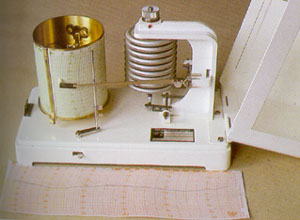
เครื่องวัดความกดอากาศแบบหมุน หรือบารอกราฟ (เก่ากว่ารุ่นนี้มาก)
เครื่องมือตรวจวัดอุตุนิยมวิทยา ณ สถานีเกษตรหลวงดอยอ่างขาง ในช่วงปี พ.ศ. 2519 เป็นเครื่องมือตรวจอากาศผิวพื้นมาตรฐานของกรมอุตุนิยมวิทยา เพื่อวัดอุณหภูมิ ความชื้น ปริมาณฝน โดยหลักๆ ประกอบด้วยไซโครมิเตอร์ (วัดความชื้น/อุณหภูมิ), เครื่องวัดปริมาณน้ำฝน (Rain Gauge), และบาโรมิเตอร์ (ความกดอากาศ)
เครื่องมือหลักที่ใช้งานในปี 2519:
ตู้คุ้มแดดฝน (Instrument Shelter) ภายในมี เครื่องวัดความกดอากาศแบบหมุน บารอกราฟ (Barograph)
เครื่องวัดความกดอากาศแบบหมุน ส่วนใหญ่หมายถึง บารอกราฟ (Barograph) ซึ่งเป็นเครื่องวัดความกดอากาศแบบแอนิรอยด์ชนิดหนึ่ง ที่มีกลไกตลับสุญญากาศเชื่อมต่อกับแขนปากกา ขีดเส้นบันทึกข้อมูลลงบนกระดาษกราฟที่หุ้มอยู่บนทรงกระบอก ซึ่งหมุนได้ด้วยกลไกนาฬิกา ทำให้เห็นแนวโน้มความกดอากาศได้อย่างต่อเนื่อง
เครื่องวัดปริมาณน้ำฝน (Rain Gauge): แบบธรรมดา (Non-recording)
Sling psychrometer for outdoor use (ไซโครมิเตอร์แบบสลิง) เครื่องวัดความชื้นในอากาศ ใช้เครื่องมือนี้สำหรับการวัดภาคสนาม
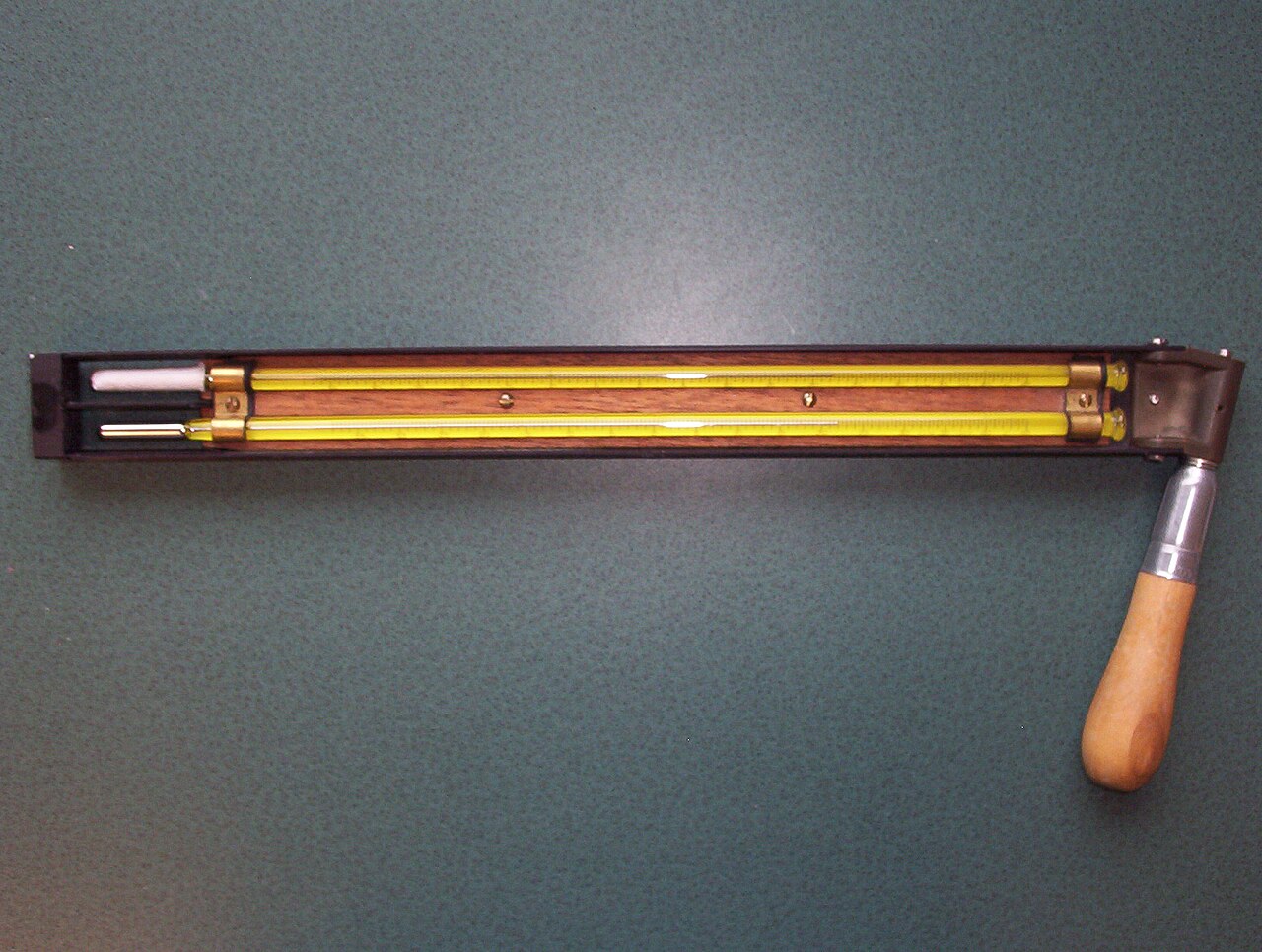
A sling psychrometer for outdoor use (เก่ากว่ารุ่นนี้มากและมีสีดำ)
Sling psychrometer
A sling psychrometer, which uses thermometers attached to a handle, is manually spun in free air flow until both temperatures stabilize.
This is sometimes used for field measurements but is being replaced by more convenient electronic sensors. A whirling psychrometer uses the same principle, but the two thermometers are fitted into a device that resembles a ratchet or football rattle. (Chedit: Hygrometer, Wikipedia.org)
ไซโครมิเตอร์แบบสลิง ซึ่งใช้เทอร์โมมิเตอร์ที่ติดอยู่กับด้ามจับ จะถูกหมุนด้วยมือในกระแสลมอิสระจนกว่าอุณหภูมิทั้งสองจะคงที่ บางครั้งมีการใช้เครื่องมือนี้สำหรับการวัดภาคสนาม แต่กำลังถูกแทนที่ด้วยเซ็นเซอร์อิเล็กทรอนิกส์ที่สะดวกกว่า ไซโครมิเตอร์แบบหมุนวนใช้หลักการเดียวกัน แต่เทอร์โมมิเตอร์ทั้งสองตัวถูกติดตั้งในอุปกรณ์ที่มีลักษณะคล้ายกับเฟืองหรือลูกบอลเขย่าสำหรับเล่นฟุตบอล
นอกจากนี้ยังวัดปริมาณน้ำที่ไหลผ่านบนฝ่ายกั้นน้ำด้านทิศตะวันออก ในหน้าแล้ง และวัดอุณหภูมิยอดหญ้าในหน้าแล้งอีกด้วย
ทุกวันจะต้องเดินเปลี่ยนกระดาษกราฟเครื่องบารอกราฟ (Barograph) วัดอุณหภูมิ วัดความชื้น ตั้งแต่สวนพันห้า ด้านทิศใต้สุดของสถานี มี 1 ตู้ตรวจอากาศ ผ่านบ้านคุ้ม เข้าสวนท้อ อยู่ทางด้านทิศตะวันตกของสถานี 1 ตู้ตรวจอากาศ แล้วเดินขึ้นเขาไปแปลงทดลองปลูกแอปเปิ้ล ด้านทิศเหนือ 3 ตู้ตรวจอากาศ จนถึงตู้ตรวจอากาศสุดท้าย เกือบสุดยอดเขา
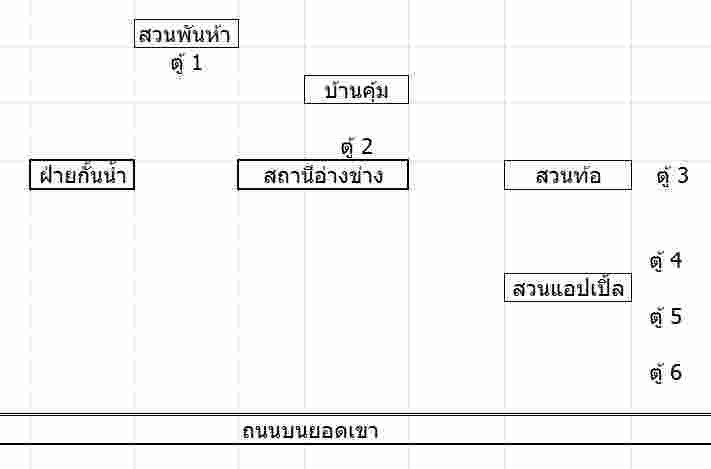
แผนผังแสดงเส้นทางการทำงานประจำวัน
| |
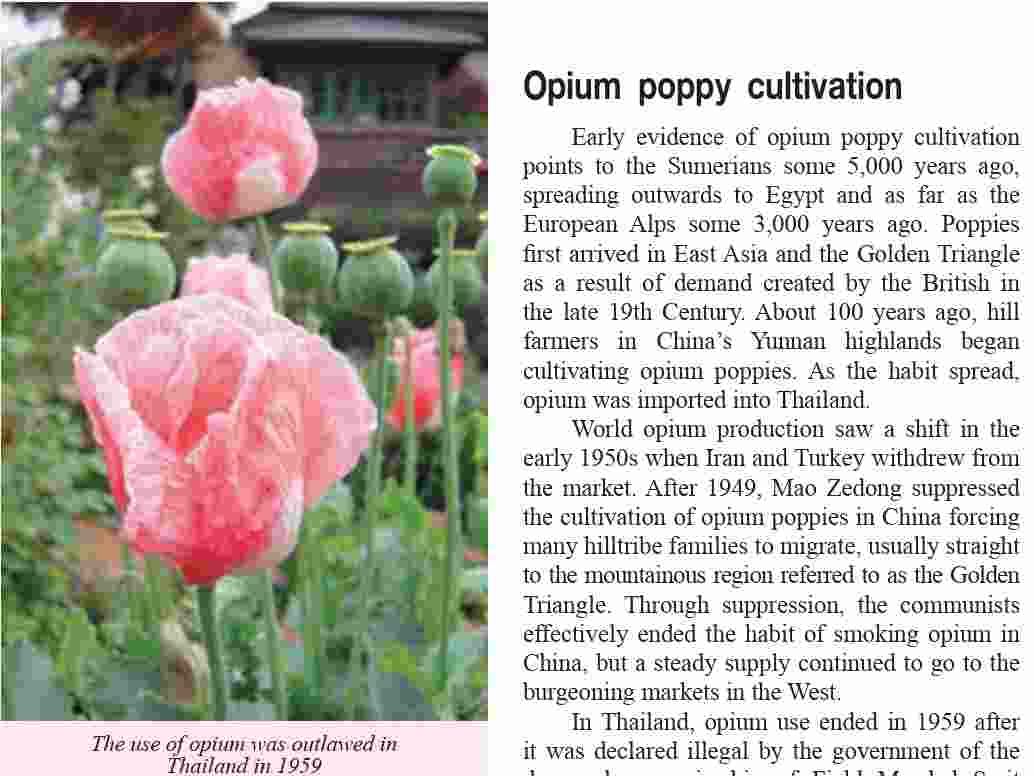
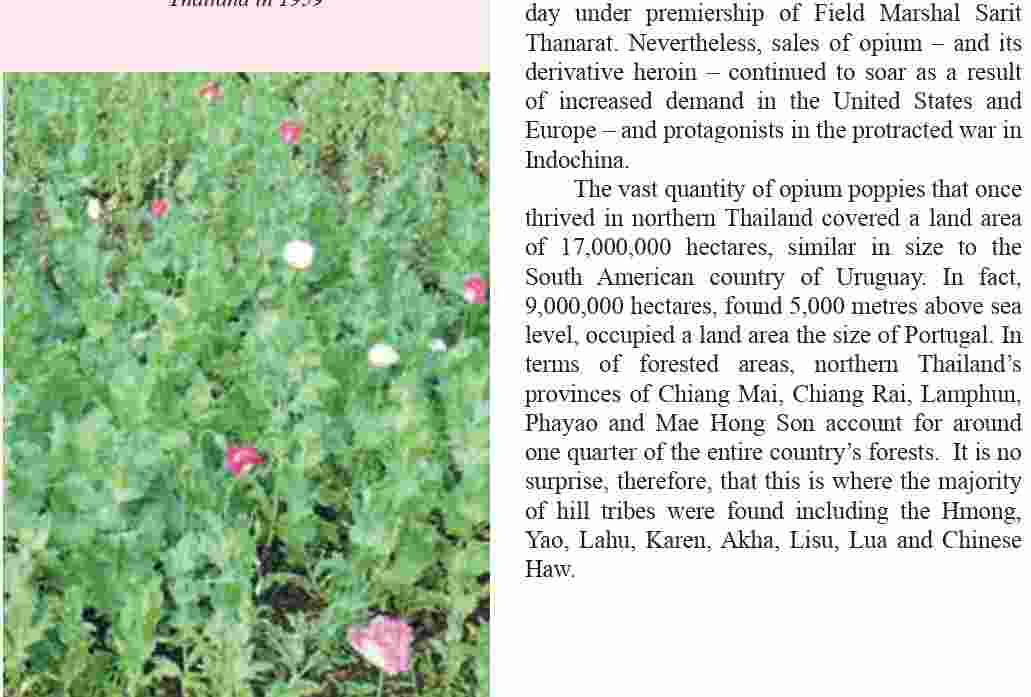
From: Royal Activities and International Cooperation, 2014, page 109
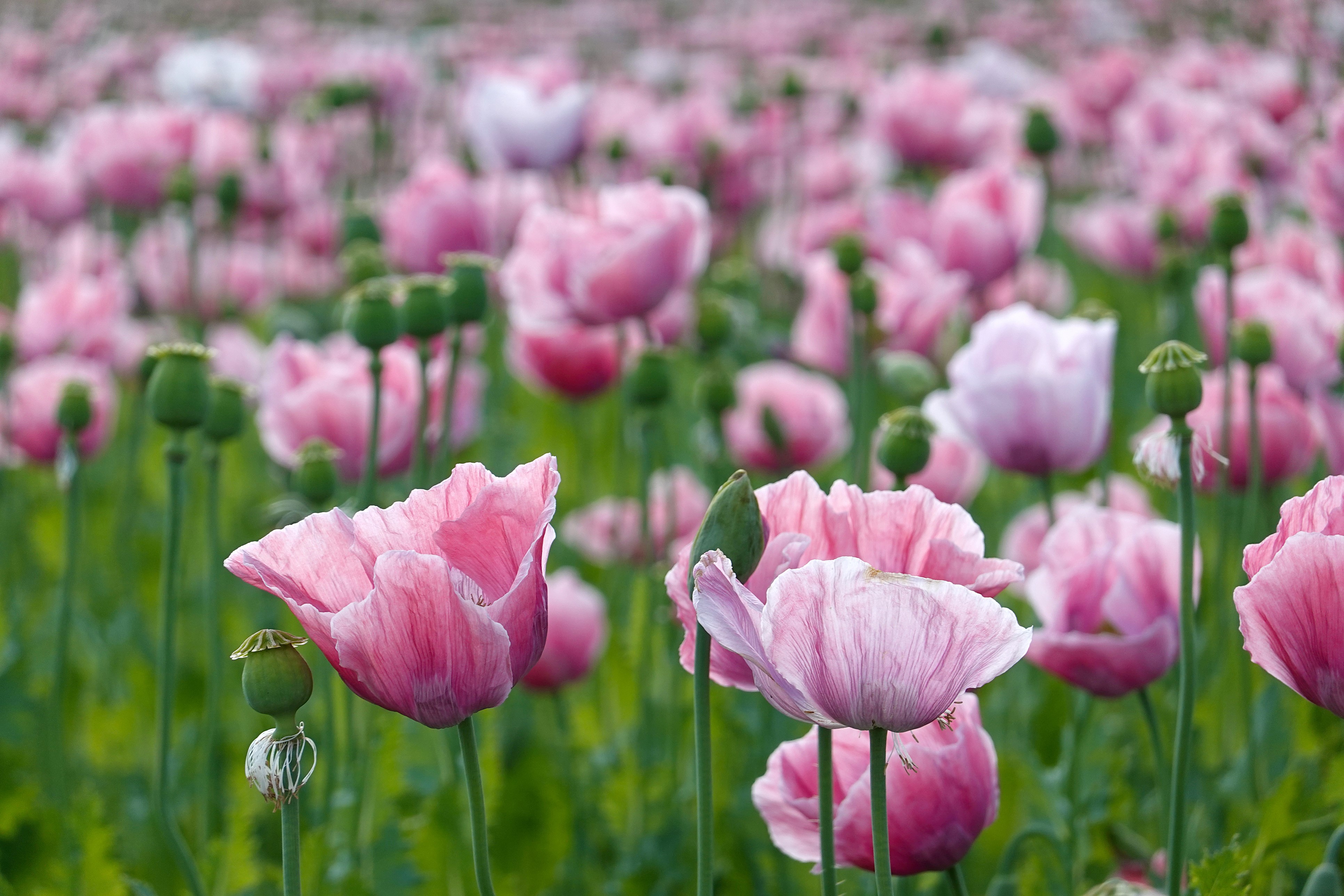
Field of pink poppies in the wind
Chedit:
From Poppy to Coffee : How Thailand Became a Model for Alternative Development,
Royal Thai Consulate-General, Fukuoka (2021)
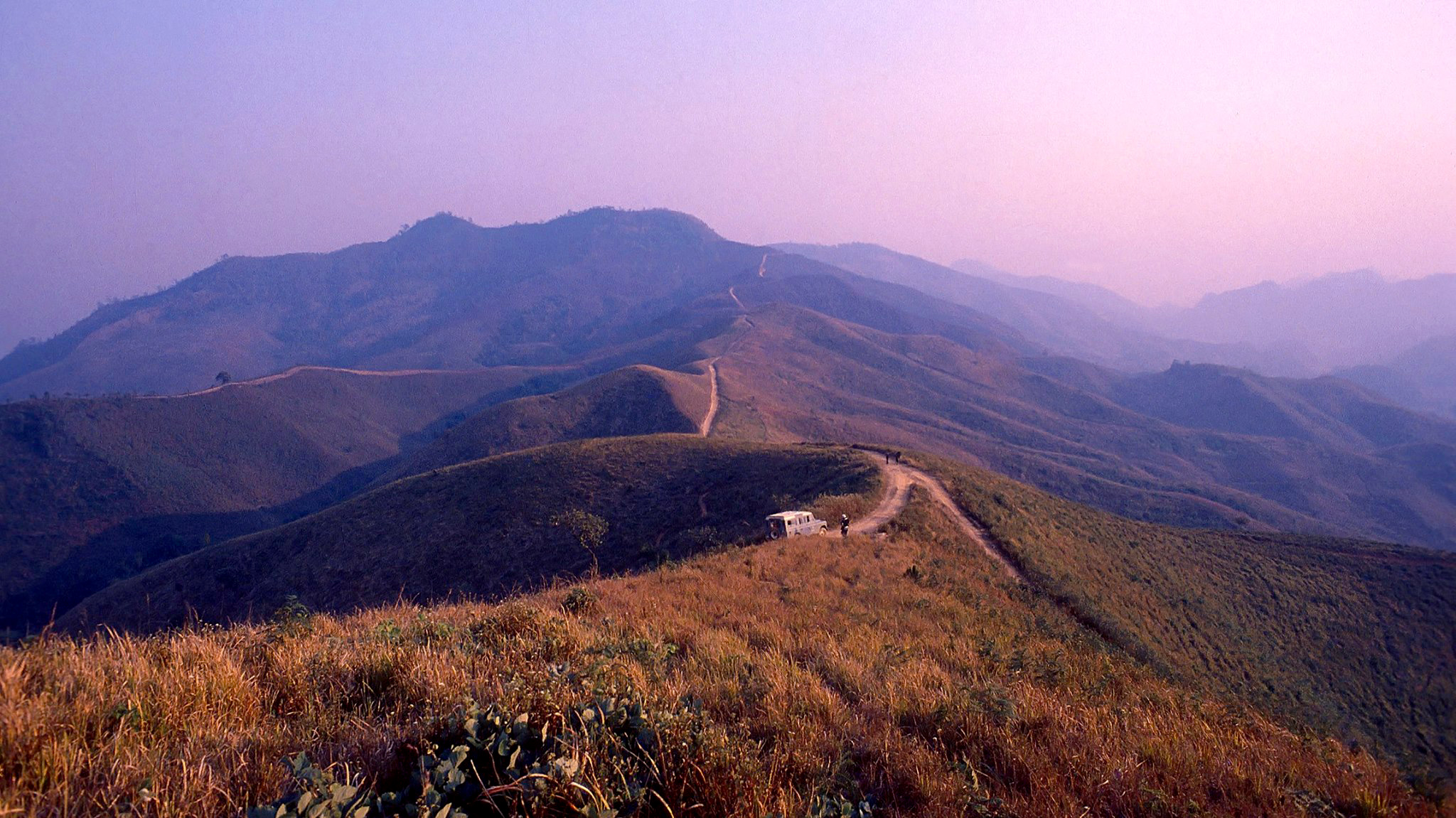
กิ่วลม ดอยอ่างขาง มองไปทางทิศตะวันออกเฉียงเหนือจะเห็นแสงไฟกลางคืนของ อ.ฝาง,
Chedit Proto: (Napan Sevikul), (2518)
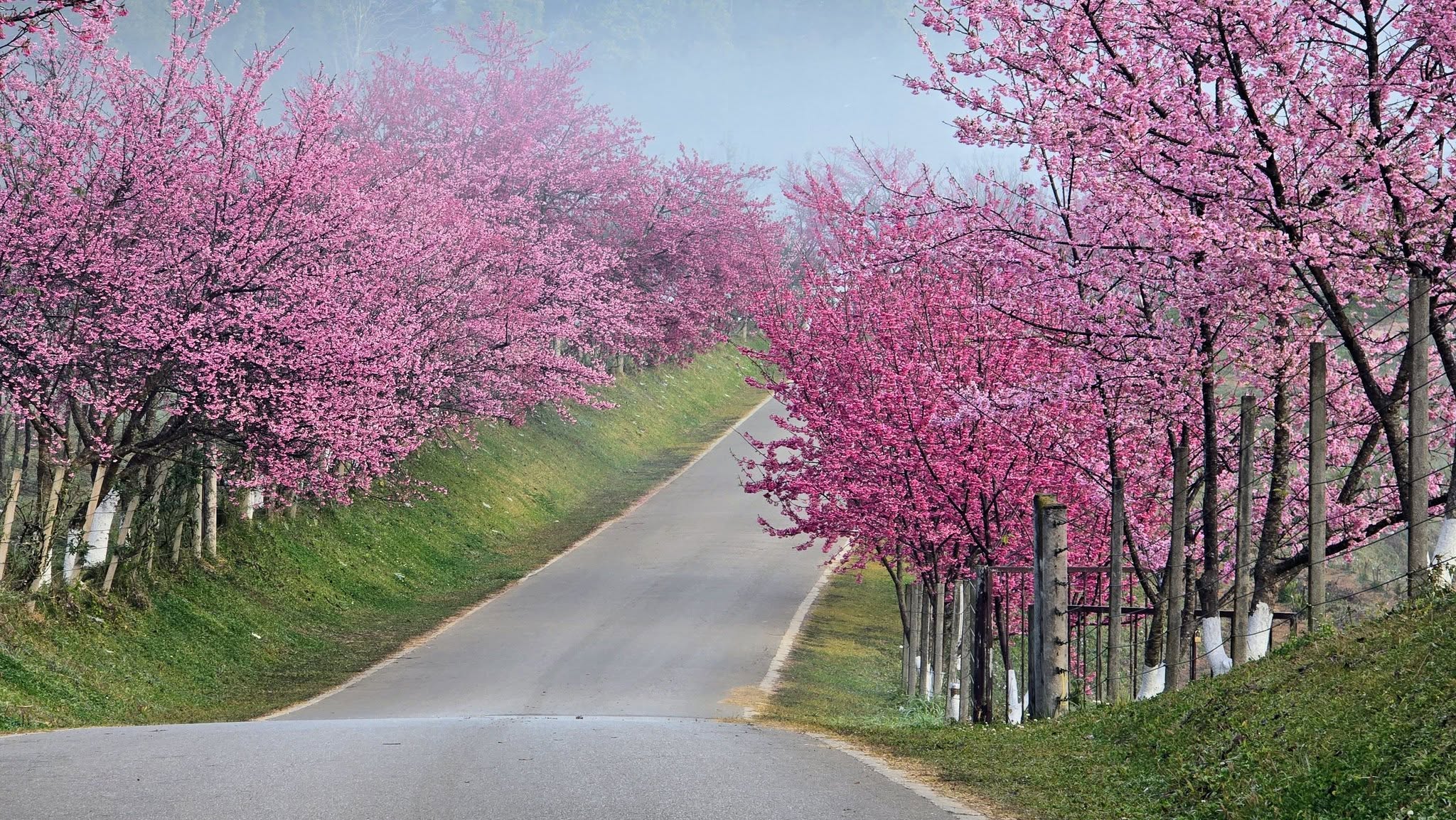
ซากูระเมืองไทย ดอยอ่างขาง, Chedit Proto: (Napan Sevikul), (2026)
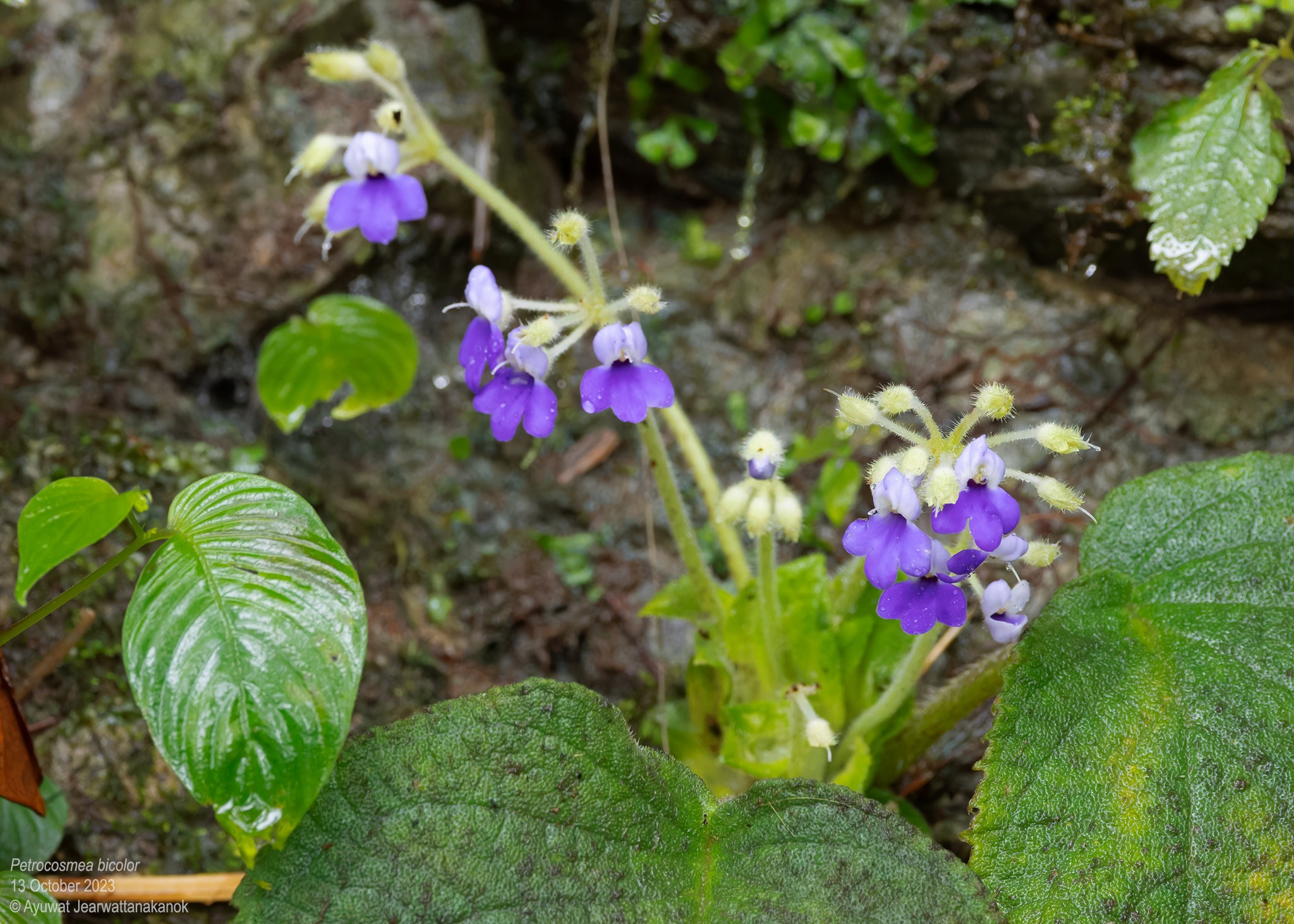
Small and beautiful flowers while wandering around Doi Ang Khang,
Chedit Proto: (Ayuwat Nature Photography), (2503)
ในปี 2519 ขณะที่ผมทำงานอยู่ มีหน่วยงานหลายหนุ่วยงานมาร่วมทำงานอยู่ด้วย เช่น ตชด.มาประจำ 5-6 นาย ตั้งหน่วยอยู่ด้านตะวันออกของบ้านคุ้ม,
เจ้าหน้าที่จับนก (จากหน่วยงานราชการ) มีหัวหน้าที่พวกเราเรียกชื่อว่า "อาจารย์เสียงจับนก" สร้างที่พักอยู่ตรงข้ามสำนักงานสถานีเกษตรอ่างข่าง ด้านทิศใต้ อยู่ข้างโรงอาหารโรงครัวของเจ้าหน้าที่ (ผู้ใหญ่),
เจ้าหน้าที่จับฝึ้ง จับผี้งป่ามาเลี้ยงในรังผึ้งใต้ต้นท้อ ที่สวนท้อ ใครแจ้งที่อยู่ของรังผึ้งจะมีรางวัลให้ 30 บาท ผมเคยบอกให้ไปจับผึ้งก็ได้เงินรางวัลด้วย, มีสำนักงานเจ้าหน้าที่ป่าไม้ อยู่ทางด้านเหนือของกิ่วลม เลยหมู่บ้านขอบด้ง ชาวมูเซอดำไปทางตะวันตกเฉียงเหนือ นอกจากนี้ก็มีคณาจารย์จาก ม.เกษตร กรุงเทพ มาติดตามงานเป็นประจำทุกเดือน
ตอนนั้นยังไม่มีโรงเรียนสอนหนังสิอ มีโรงไฟฟ้าปั่นไฟจากเครื่องปั่นไฟเปิดปิดเป็นเวลา ราว 18.00-19.30 น. เปิดเมื่อมีคณะอาจารย์มาตรวจงาน ส่วนมากคนบนดอยจะใช้เทียน ไฟฉายกับตะเกรียงน้ำมันกัน น้ำประปาที่ใช้ในสถานีต่อมาจากฝายกั้นน้ำทางทิศตะวันออกของสถานี น้ำแรงเพราะฝายอยู่ที่สูงกว่า 20 เมตร ไม่มีเครื่องสูบน้ำ
ส่วนคนในหมู่บ้านคุ้ม จะใช้น้ำจากฝายเหนือหมู่บ้าน 500 เมตร ส่วนโรงเลี้ยงแกะ (ด้านตะวันออกบ้านคุ้ม) กับน้ำที่ใช้ในการเกษตรจากสวนท้อถึงบ้านคุ้ม ก็ต่อมาจากฝายน้ำด้านทิศตะวันออกของสถานี ตอนนั้นมีน้ำใช้ทั้งปี
มีอยู่ครั้งหนึ่ง (ปี พ.ศ.2519) สวนส้มสุวิมล อ.ฝาง จ.เชียงใหม่ ติดต่อทางสถานีอ่างข่างให้ไปติดตั้งตู้อุตุนิยมวิทยาที่ใช้เครื่องมือตู้คุ้มแดดฝน (Instrument Shelter) ภายในมี เครื่องวัดความกดอากาศแบบหมุน บารอกราฟ (Barograph)
เครื่องวัดความกดอากาศแบบหมุน ส่วนใหญ่หมายถึง บารอกราฟ (Barograph) ซึ่งเป็นเครื่องวัดความกดอากาศแบบแอนิรอยด์ชนิดหนึ่ง ที่มีกลไกตลับสุญญากาศเชื่อมต่อกับแขนปากกา ขีดเส้นบันทึกข้อมูลลงบนกระดาษกราฟที่หุ้มอยู่บนทรงกระบอก ซึ่งหมุนได้ด้วยกลไกนาฬิกา ทำให้เห็นแนวโน้มความกดอากาศได้อย่างต่อเนื่อง
เครื่องวัดปริมาณน้ำฝน (Rain Gauge): แบบธรรมดา (Non-recording) โดยมีผมไปดำเนินการและสอนเจ้าหน้าที่ของสวนส้มสุวิมลให้ใช้งานได้
สวนส้มสุวิมลเป็นสวนส้มเก่าแก่ที่มีชื่อเสียงมากในอดีต (ประมาณปี พ.ศ. 2514) ขึ้นชื่อเรื่องผลส้มขนาดใหญ่ หวานอร่อย และเป็นแหล่งปลูกส้มคุณภาพสูงในยุคก่อนที่จะมีสวนส้มธนาธร อย่างไรก็ตาม ปัจจุบันสวนส้มสุวิมลแห่งนี้ได้ปิดตัวลงแล้ว
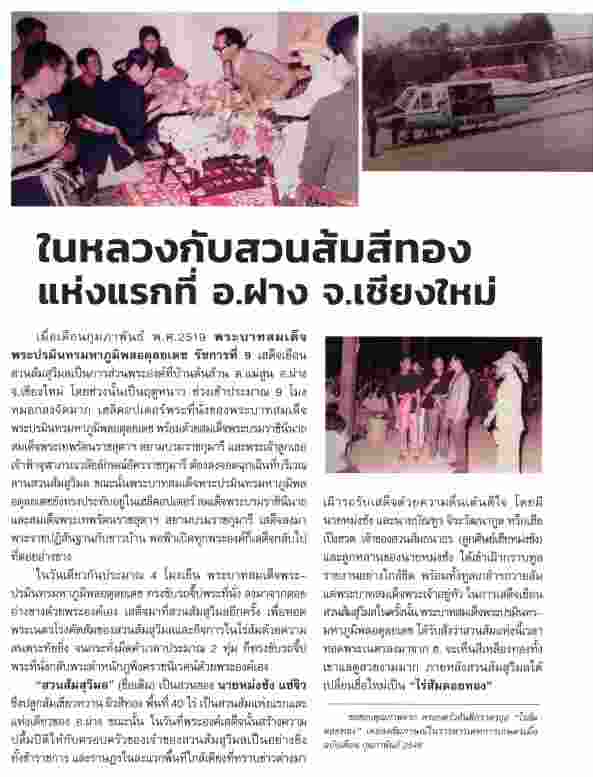
ในหลวงกับสวนส้มสีทองแห่งแรกที่ อ.ฝาง จ.เชียงใหม่,
Chedit: ku.ac.th
ตอนจบ รร.อุตุนิยมวิทยา รุ่นที่ 7 ในปี 2518 ได้รับการบรรจุที่ สถานีอุตุนิยมวิทยาอุทกท่าตูม อ.ท่าตูม จ.สุรินทร์ แต่ยังไม่ได้ไปทำงานก็มีคำสั่งใหม่ให้ไปปฎิบัติหน้าที่ที่ สถานีอุตุนิยมวิทยาอุ้มผาง อ.อุ้มผาง จ.ตาก
พ่อแม่ผมเห็นว่าตอนนั้น อ.อุ้มผาง จ.ตาก อันตรายจาก ผกค. มีการวางระเบิดถนนไป อ.อุ้มผาง เป็นประจำ จึงให้ผมลาออกจากกรมอุตุนิยมวิทยา อยู่มาไม่กี่เดือน ร.อ.วิศิษฐ์ รัศมิทัศน์ อ.ที่เคยสอนที่ รร.อุตุนิยมวิทยา ได้โทร. มาชวนให้ผมไปทำงานที่สถานีเกษตรหลวงดอยอ่างขาง ผมตอบตกลงแล้วไปสมัครงานที่
โครงการหลวง มหาวิทยาลัยเกษตรศาสตร์ บางเขน
ผมออกเดินทางจากกรุงเทพเพื่อไปทำงานครั้งแรกที่สถานีเกษตรหลวงดอยอ่างขาง (ปลายปี 2518) นั่งรถทัวร์จากกรุงเทพมาลงที่เชียงใหม่ แล้วต่อรถสองแถวไปรายงานตัวที่สำนักงานโครงการเกษตรหลวง ถนนสุเทพ ตำบลสุเทพ อำเภอเมืองเชียงใหม่ เจ้าหน้าที่พาขึ้นไปพักบนโครงการหลวงดอยปุยหนึ่งคืน
พอเช้าก็นั่งรถของโครงการหลวงดอยปุย ไปส่งจนถึงโรงเรียนบ้านหัวนา ตำบลม่อนปิ่น อำเภอฝาง จังหวัดเชียงใหม่ เพื่อจะขึ้นเฮลิคอปเตอร์ของกองทัพอากาศมารับขึ้นไปส่งบนดอย
แต่โชคไม่ดีเฮลิคอปเตอร์เที่ยวนี้มีผู้โดยสารผู้ใหญ่ที่จะไปตรวจงานที่สถานีเกษตรหลวงดอยอ่างขางเต็มโหลด เครื่อง ฮ. ไม่สามารถไปด้วยได้ จึงต้องนั่งรถไปส่งที่ทางขึ้นเชิงดอยแล้วเดินเท้าไป 2 คน กับพี่ ตชด. ที่ไม่สามารถขึ้นเฮลิคอปเตอร์ได้ การเดินขึ้นดอยไปสถานีเกษตรหลวงดอยอ่างขางครั้งนี้ไม่ได้เตรียมตัวว่าจะเดินไป มีอาการเหนื่อยสาหัสสากรรจ์มาก เพราะไม่ได้เตรียมตัวเตรียมใจมาก่อน พี่ ตชด.น่ารักและใจดีมาก
คอยรอตลอด ไม่เดินแบบที่เขาชิน ไปถึงสถานีเกษตรหลวงดอยอ่างขางจนเย็นเกือบมืด เหนื่อยกว่าเล่นลักบี้ที่ ม.รามคำแหงหลายเท่าตัว
ผมทำงานอยู่บนดอยอ่างช่าง 2 ปี ลงมาพื้นราบ อ.ฝาง หรือกลับบ้านกรุงเทพน้อยมาก แค่ 4-5 ครั้ง
เพราะเส้นทางลำบาก โดยเฉพาะหน้าฝนถนนลื่นพังเป็นหลุมเป็นบ่อ ที่จำใจลงมากรุงเทพเพื่อเข้ามาสอบที่ ม.รามคำแหง ปีละ 2 ครั้ง งด Summer ไม่ลงทะเบียน เนื่องจากเบื่อเดินทาง ถ้าหน้าฝนรองเท้าเปื้อนโคลน เสื้อผ้ามอมแมมเป็นที่รังเกียจของคนเมือง ผมไม่มีเพิ่อนอยู่เชียงใหม่ต้องงรีบเดินทางเข้ากรุงเทพ
รถทัวร์บางสายเห็นผมแต่งตัวมอมแมม ผมเผ้ายาวรุงรังเขาก็ปฏิเสธว่ารถทัวร์เต็ม
ส่วนมากจะใช้เส้นทางจากบ้านม่วงชุม ผ่านบ้านนอแล มาสถานีอ่างขาง เดินขึ้นตามถนน (เส้นทางที่เดินขึ้นมาทำงานครั้งแรก) ครั้งหนึ่งมาคนเดียวลองใช้เส้นทางจากบ้านแม่เพอะ ผ่านบ้านขอบด้ง ผ่านกิ่วลม และเข้าสู่สถานีอ่างขาง เส้นทางนี้ไม่มีถนนเป็นทางคนเดิน เขาสูงชันมาก
มาคนเดียวเกือบหลงทาง เผอิญเจอชาวมูเซอร์ดำ เลยถามเขาไปว่า "แลขอบด้ง" "ขอบด้งไปทางไหน" เขาก็ชี้บอกทางให้ เข็ดจนตาย
ต้นปี 2520 ผมล้มป่วยเป็นไข้นอนหวาวสั่น ทางรุ่นพี่จึงย้ายผมมานอนร่วมกับพวกพี่ ตชด.เพื่อจะดูแลใกล้ชิด ตอนนั้นไม่มีหมอไม่มีสำนักงานอนามัย มีแต่พี่ ตชด.ที่เรียกว่าหมอ ซึ่งเรียนมาทางปฐมพยาบาลเบื้องต้น พอคืนที่ 3 ผมหนาวสั่นจนทนไม่ไหว ต้องขอยาควินิน (Quinine Sulfate) จากพี่ ตชด.มากิน พอถึงรุ่งเช้าผมหายไข้อาการดีขึ้นเป็นปกติ คนบนดอยก็อย่างนี้ละครับ กินยาเท่าที่มี
พอลงมาสอบ ม.รามคำแหง ปลายปีที่ 2 (ที่ทำงานอยู่บนดอย) ไม่เหลือเพื่อนฝูงเลยสักคน จบกันไปหมด รู้สึกอยากได้ปริญญาบ้าง เลยลาออกมาเรียนจริงๆ แค่ 2 ปี กับหนึ่ง Summer จนได้รับพระราชทานปริญญาบัตร ศิลปศาสตรบัณฑิต (ศศบ. รัฐศาสตร์) เมื่อ 28 มีนาคม 2523 สมใจพ่อแม่ที่อยากเห็นหน้าลูกบ้าง แกบ่นว่าผมไม่ค่อยได้กลับบ้าน คนแก่ก็อยากเห็นหน้าลูกอยู่ดีมีสุข ตอนเข้ารับพระราชทานปริญญาก็มีพ่อแม่ไปแสดงความยินดี 2 ท่าน
หาเพื่อนฝูงไม่มีสักคน เป็นเด็กรุ่นน้องทั้งนั้น เพราะผมใช้เวลาเรียน ม.ราคำแหงเกือบ 9 ปี จึงจบ
|
Reference
: Royal Activities and International Cooperation
: อ่างขางแบบ ขาว-ดำ, (Napan Sevikul)
: เมื่อในหลวงท่านขึ้นไปเห็นทิวเขาและยอดดอยในสมัย พ.ศ. 2510-2512, ( Napan Sevikul)
: สองพระองค์ ทรงพระดำเนินตามสันเขา จากบ้านหลวงมายังบ้านคุ้ม, ( Napan Sevikul)
: เมื่อก่อนอ่างขางเป็นแบบนี้ แล้ววันนี้สวยอย่างนั้น, (2026) ( Napan Sevikul)
: "สร้าง" อ่างขาง .., (2026) ( Napan Sevikul)
: Doi Ang Khang (sawadiscovery.com)
: From Poppy to Coffee : How Thailand Became a Model for Alternative Development
: Angkhang Royal Agricultural Station
: เส้นทางความสำเร็จ 55 ปี “สถานีเกษตรหลวงอ่างขาง” โครงการหลวงแห่งแรกของไทย
: สถานีเกษตรหลวงอ่างขาง, วิกิพีเดีย
: อ่างขาง โครงการหลวงแห่งแรก, 2563
: นักท่องเที่ยวสัมผัสความหนาวที่ดอยอ่างขาง - ชมใบไม้เปลี่ยนสี, 2564
: “ดอยอ่างขาง” โครงการหลวงแห่งแรกจากการเสด็จประพาสต้น, 2561
: ภาพถ่ายดาวเทียมจากวิกิแมเปีย หรือกูเกิลแมปส์
: ตามรอยพระราชา ณ สถานีเกษตรหลวงอ่างขาง โครงการหลวงแห่งแรกของไทย, 2016
: สถานีเกษตรหลวงอ่างขาง EP1 : แปลงส่งเสริมผักอินทรีย์ (Video), หมู่บ้านนอแล
: Angkhang Royal Agricultural Station (Video)
: Royal Hilltribe Project Ban Khun Chang Kien, Chiang Mai 1973 (Video)
: บ้านขอบด้ง: เสน่ห์อำเภอฝางที่คุณควรไปลอง, tiktok
: ดอยอ่างขาง..ในความทรงจำ, 2555
: ในหลวงกับสวนส้มสีทองแห่งแรกที่ อ.ฝาง จ.เชียงใหม่ (dowload PDF), ku.ac.th
: “สตรอว์เบอร์รี่ พันธุ์พระราชทาน 80” ไม้ผลเมืองหนาว สู่การส่งเสริมชีวิตชาวเขา, 2560
: Hygrometer, Wikipedia.org
: ความภูมิใจของผม การเลี้ยงสุกรบนดอยอ่างขาง โดย ผศ นาม ศิริเสถียร, ผศ.นาม ศิริเสถียร
: ข้อมูลพื้นฐานโครงการพัฒนาพื้นที่สูงแบบโครงการหลวงดอยปุย, (PDF)
: Doi Ang Khang: The Mountains of Eternal Spring
: DOI ANG KHANG
: DOI ANG KHANG, CHIANGMAI PROVINCE (Pilot area 4)
: Palong Hill Tribe - History and Culture
: *
ผู้พันโด่งกองทุนรวม

|
| | |
|
|
Suchat Website Design |
More My Stock
|
More ครอบครัวทองดี
|
More น้ำใหญ่ท่วมปี 2554
|
More สถานีเกษตรหลวงดอยอ่างขาง
|
More ก่อนวัยทำงาน
|
More ชีวิตชาวฟ้า
|
 Webmaster
 |
|
|